
July 6, 2021
Choosing a Colour Palette for East Africa's Light
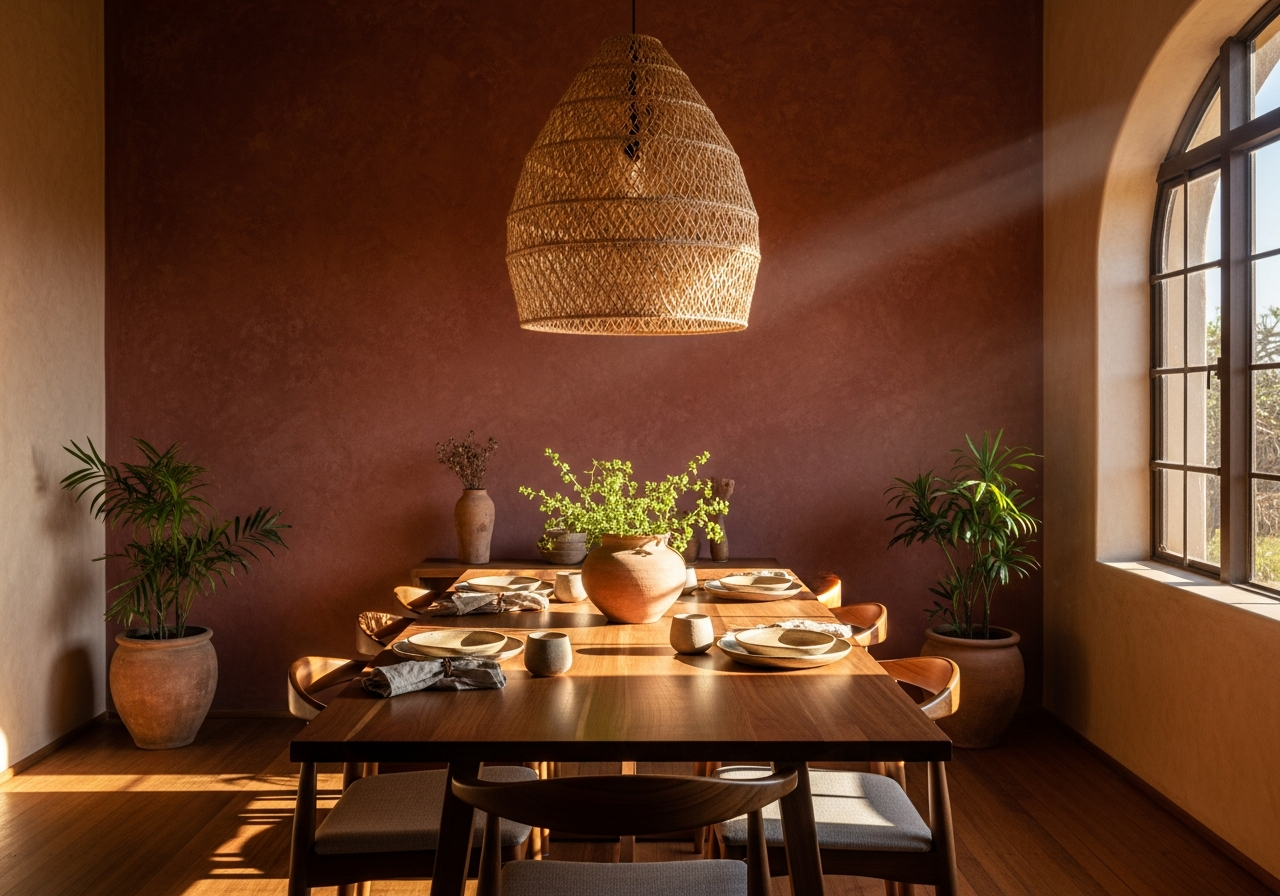
Colour never exists in isolation — it's always in conversation with light. A palette that looks sophisticated in a London showroom can feel flat or overly cool under East Africa's bright, high-altitude sun. Here's how we think about colour for homes in this part of the world.
Warm neutrals do more work here
Because natural light in Nairobi tends to be strong and warm for much of the day, neutrals with a slight warmth to them — sandy beiges, warm greiges, soft ochre — tend to feel more alive than cooler, blue-based whites and greys that can read as sterile.
Take cues from the landscape
Terracotta, deep olive, dusty clay, and the muted greens of the highlands all sit comfortably in East African interiors because they echo what's just outside the window. These tones don't compete with the view — they extend it indoors.
Test everything on-site, at different hours
A colour sample looks different at 7am, at midday, and at dusk. We never finalise a palette from a swatch alone — we tape samples to the actual wall and observe them across a full day before committing.
Let accent colour do the talking
With a warm, grounded base, a single confident accent colour — a burnt orange cushion, a deep green door, a hand-woven textile — carries far more impact than it would against a colder backdrop. Restraint in the base palette makes room for a considered pop of colour.
Consider the room's orientation
A north-facing room and a south-facing room in the same house can call for slightly different palettes. Rooms that get less direct sun often benefit from warmer tones to compensate, while sun-drenched rooms can carry cooler, more muted colours without feeling flat.
Getting colour right for this region isn't about following a universal formula — it's about paying close attention to how light actually behaves in the space you're designing for.
Ready to bring your space to life?
Explore our work, services, and approach — and see what's possible for your home or hospitality project.
Learn More